
"Guatemalan flavor profiles"
89 article(s) found

What is the best variety of coffee beans? what kind of coffee beans is the best?
Professional coffee knowledge exchange more coffee bean information Please follow the coffee workshop (Wechat official account cafe_style) the world's best Arabica coffee beans are not listed in national order, because the biggest factor is personal preference. For example, some people may prefer the fullness and acidity of Kenyan coffee to the classic balance of Colombian coffee. Other people may not.
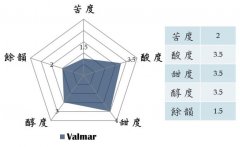
Suggestion on brewing parameters of hand-brewed coffee in Porsa Manor, Guatemala
For professional baristas, please follow the coffee workshop (Wechat official account cafe_style) a. Tasting flavor: peach, peanut, cereal flavor radar map: bitterness 1.5 acidity 3.5 sweetness 4 alcohol 3 aftertaste 2 b. Brewing result: this is a very suitable for hand-brewed coffee, the water temperature of about 85 degrees, just can best explain her temperature, just calmly circle note

Boutique Coffee detailed explanation of Fine Coffee (Specialty coffee)
Coffee producing countries have a unique set of criteria for the grading and evaluation of coffee, which can be used as an indicator of international business. In recent years, coffee consuming countries have begun to require the introduction of a new evaluation scale, the concept of boutique coffee. In the past, coffee evaluation scale 1. The quality is highly evaluated by the place of origin 2. The evaluation of quality by sieve is the tacit understanding of the international coffee business market.
Brief introduction of Coffee Flavor defect Group Aromatic Taint 36 smell bottle
Professional coffee knowledge exchange more coffee bean information please follow the coffee workshop (Wechat official account cafe_style) Aromatic Taint (defect group) (wet): soil Eathy, straw Straw, medicine Medicinal soil: flavor type (Aroma group) earth soil flavor characteristics (Aromatic features of the sample): this is new after heavy rain
A brief introduction to the characteristics of Rosa Coffee characteristics of Panamanian coffee beans
The species of Geisha was discovered in the Rose Summer Forest of Ethiopia in 1931 and sent to the Coffee Institute in Kenya; it was introduced to Uganda and Tanzania in 1936, in Costa Rica in 1953, and Panama was introduced in the 1970s by Francesca of Dongba Seven Farm Garden. Mr. Serraxin got the seeds from CATIE in Costa Rica and started growing Rosa Coffee because
Brief introduction of Sidamo Coffee Bean Sidamo Coffee Flavor
Civet coffee (Kopi Luwak) is a recently invented coffee, produced in Indonesia, coffee beans are one of the civets' food range, but the coffee beans cannot be completely digested by the digestive system. The coffee beans are fermented in the civets' intestines and stomach and excreted by the feces. The locals take out the coffee beans in the civet feces and then do the processing, that is, the so-called Kopi Luwak, the taste of this coffee.
Latin American coffee bean flavor producing countries three major coffee varieties and seven major producing areas in the world
Latin American Coffee the unique tropical rain forest environment in parts of Bolivia provides excellent natural conditions for the growth of organic coffee. The aroma of Bolivian coffee is rich and unique, both after the bean is ground and the aroma of the coffee is quite rich, similar to the mixture of flower and fruit aromas, the perfect nutty flavor is impressive. [Bolivir]

A brief introduction to the introduction to Coffee roasting, the complete Book of Coffee self-baking
When the author published the first edition of this book in 1996, roasting coffee beans at home was something that only tireless coffee addicts would do. At that time, roasting coffee beans was a very difficult thing to master, and roasters had to work hard to find a way to roast coffee beans to a moderate brown. Today, individuals still roast coffee beans at home.

The introduction to coffee roasting recommends the complete Book of Coffee self-baking.
When the author published the first edition of this book in 1996, roasting coffee beans at home was something that only tireless coffee addicts would do. At that time, roasting coffee beans was a very difficult thing to master, and roasters had to work hard to find a way to roast coffee beans to a moderate brown. Today, individuals still roast coffee beans at home.